Gutters are the cheapest part of your exterior and the one that causes the most expensive damage when they stop working. Nobody thinks about them in October. Everybody thinks about them in February, when there's ice hanging off the front of the house and a water stain spreading across the living room ceiling.
The reason winter is so hard on gutters is weight. A trough full of wet leaves holds water. That water freezes, expands, and pulls the hangers loose. Once one section drops, the pitch is gone for the whole run, and every thaw sends water over the edge instead of down the downspout.
That overflow lands in the worst possible place, right at the foundation. So the window for dealing with gutters is now, in the fall, after the leaves come down and before the first hard freeze. Here's how to check what you have and how to tell repair from replacement.
What Ice Does to a Failing Gutter
Water weighs about eight pounds a gallon, and ice takes up more space than the water it came from. A twenty foot run holding a few inches of frozen slush is carrying real weight on hangers that were spaced for water passing through, not water sitting still.
The hangers give first. You'll see one section sagging lower than the rest, usually in the middle of a run or right at a corner. Once that happens, the gutter is a bathtub instead of a channel.
The second problem is what the standing water does at the roof edge. A blocked gutter contributes to ice building up along the eaves, and that ice pushes water back under the shingles. So a gutter problem quietly turns into a roof problem, which turns into a ceiling problem, without anything obvious happening outside.
Five Things to Check Before the First Freeze
Start after the leaves are down, on a day when it's raining if you can manage it. Rain shows you exactly where the water is going, which no amount of ladder work will.
Look for water spilling over the front edge, which means a clog or a pitch problem. Look for drips at the seams between sections. Look for a gap between the gutter and the fascia board, which means the hangers are pulling. Check that every downspout is actually discharging, and that it's carrying water away from the foundation rather than dumping it at the corner of the house.
Then look down. Erosion trenches in the mulch, splash marks on the siding, or a damp basement wall on one side of the house all point back to a gutter that stopped doing its job a while ago.
Repair or Full Replacement
Most gutter problems are repairs. A clog, a loose hanger, a separated seam, or a downspout that came apart are all fixable in an afternoon without touching the rest of the system.
Replacement makes sense when the problem is the gutter itself rather than the hardware. Sections that have rusted through, aluminum that's been bent and rebent, or a run that's been patched at three different seams will keep failing no matter what you do to the hangers.
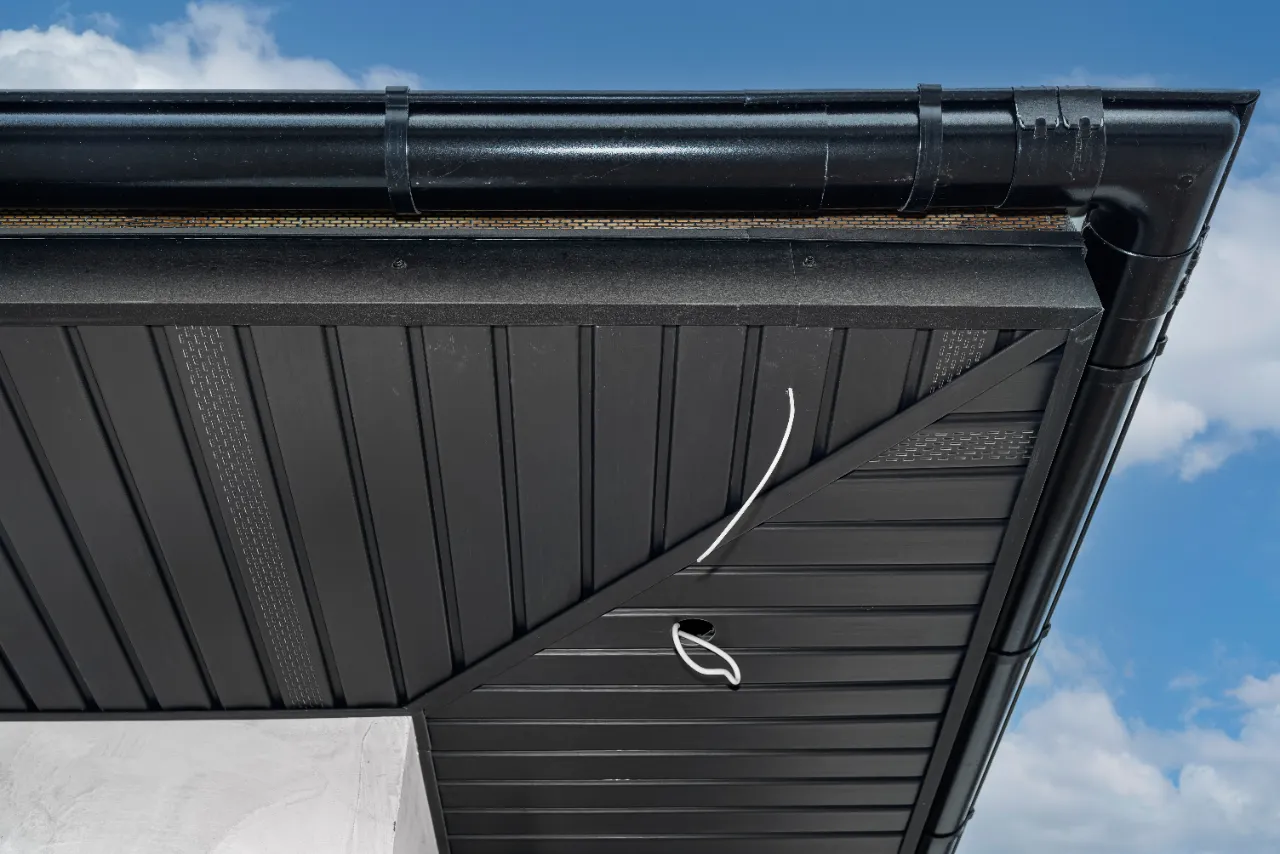
The other case for replacement is pitch. A gutter needs a slight consistent slope toward the downspout. If the run was installed level, or if the fascia behind it has rotted and pulled the whole line out of alignment, no amount of resealing fixes it. In that situation the fascia and soffit carpentry gets repaired first, then the new gutter goes on straight.

The Best Time of Year to Do It
Fall, after the last leaves drop and before the ground freezes. Working in that window means the crew can see how everything drains, the sealant cures properly in mild temperatures, and the system is ready before the first storm tests it.
Spring is the second best option, and it's when most people call, usually because they spent the winter watching water pour over the front of the house. It works fine, but you've already paid for a season of overflow at the foundation by then.
Winter installation is possible but not ideal. Sealants don't cure well in the cold and ice makes the roof edge a bad place to work. If a gutter comes down in January, a temporary fix that gets the water away from the house is usually the right call, with the full job scheduled for spring.